Ecommerce
Online stores that load fast, convert, and run themselves.
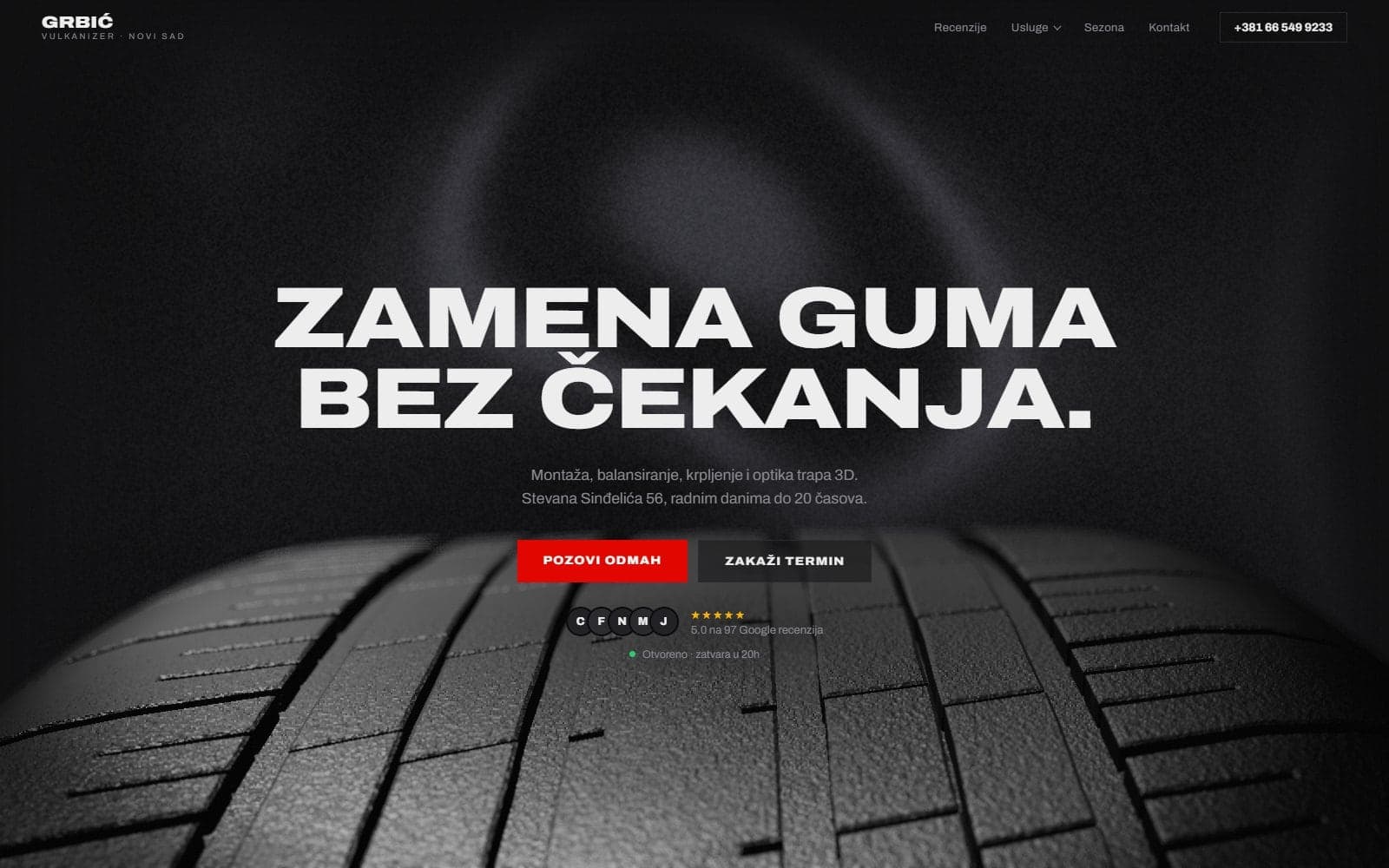
From the work: Vulkanizer Grbić
a site with a 3D tyre
A tyre shop and wheel alignment service in Novi Sad. The hero is a 3D tyre in smoke, the rest of the site leads to the phone number and a booking.
We build the store, wire the checkout, connect the payments and inventory, and keep it running after launch. You get a fast, conversion-focused storefront on Shopify or a custom stack, with product data, taxes, and shipping rules set up correctly the first time. You sell. We handle the technical side.
TIM Studio works from Novi Sad in Serbia, remotely, in English and Serbian, for companies in the UK, the EU and the US, and at home across Serbia, Croatia, Bosnia and Herzegovina and Montenegro.
What you get
A storefront built on Shopify, WooCommerce, or a custom headless stack, matched to your catalog size and margins
Checkout configured with local and card payment methods, VAT and tax rules, plus shipping zones and rates
Product catalog, collections, variants, and filtering set up so customers find items in two or three clicks
Inventory and order sync between the store and your ERP, accounting, or fulfillment tool
Cart, abandoned checkout, and post-purchase email flows connected and tested
Core Web Vitals tuned: lazy-loaded images, fast product pages, and a checkout that holds up on mobile
How the work runs
Catalog and commerce audit
We map your products, variants, payment methods, tax obligations, and shipping logic before any design decision is made.
Build and integrate
We build the storefront and checkout, then connect payments, inventory, and the tools that move orders from cart to doorstep.
Test the full purchase path
We run real test orders across devices and payment types to confirm pricing, tax, shipping, and confirmation emails all fire correctly.
Launch and maintain
We migrate the catalog, go live, then monitor uptime, fix issues, and adjust the store as your range and promotions change.
Before you ask
For most catalogs under a few thousand SKUs, Shopify is faster to launch and cheaper to run, so we recommend it. We move to WooCommerce or a custom headless stack only when you need pricing logic, B2B portals, or integrations that hosted platforms cannot handle. We make the call after the catalog audit, not before.
Yes. We map old URLs to new ones with redirects, carry over product descriptions and metadata, and preserve your category structure so rankings and traffic hold through the move. We test redirects and run a crawl before and after launch to confirm nothing breaks.
Yes. We sync stock levels, orders, and customer data between the store and tools like your ERP, accounting software, or fulfillment provider. Where a direct integration does not exist, we build the connection so you are not copying orders by hand.
Write to us.